Buying your first units: standard, ADA, and hand-wash stations
The units are the cheapest major thing you will buy, which makes them easy to get wrong in the other direction — over-buying variety you do not have contracts for, or under-buying the ADA units a job requires. Buy to the accounts you can win, not to the fleet you imagine. This chapter covers the three unit types you will start with, what each costs, and the order to buy them.
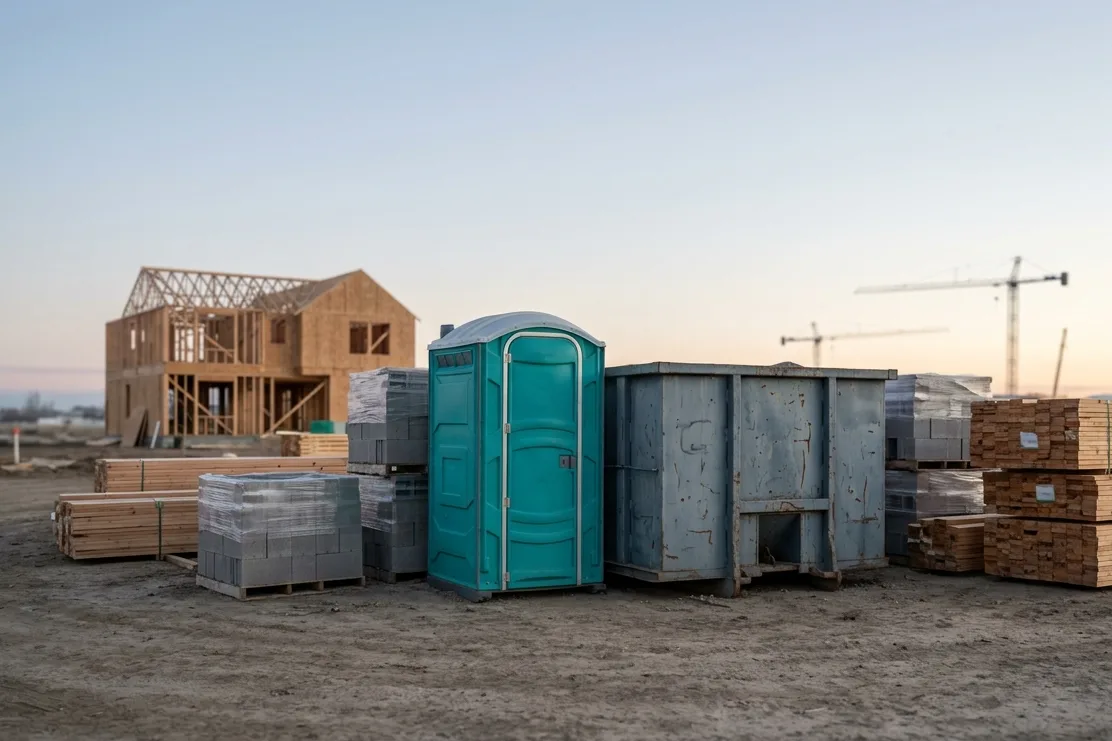
The three units you start with
The standard unit is the workhorse of every construction site and event. It is what people picture when they hear “porta potty,” and it is the bulk of every fleet. Start here and stay heavy here.
The ADA wheelchair-accessible unit is larger, has a ground-level entry and interior room to maneuver, and is required at many public events and on government or larger construction contracts. The requirement is usually written into the contract or the local code as a ratio of accessible units to standard ones. You buy these to meet specific requirements, not to stock up.
The standalone hand-wash station is a sink unit rented alongside the restrooms — sometimes required (food events, certain job sites), often a paid add-on that raises the value of a booking. Basic gravity-fed models are cheap; heated and multi-basin units cost more.
Luxury restroom trailers are a separate, higher-end segment with their own economics. They are not a starting purchase — add them later once your route is established and you have events that justify the price.
What the units cost
- Standard units: about $900–$1,250 new, with entry-level HDPE units from around $575 (per Total Restroom 2026 and Satellite Industries 2025).
- ADA units: about $2,550–$3,265 new (per Total Restroom 2026) — roughly two to three times a standard unit.
- Hand-wash stations: about $340–$850 basic, or $1,200–$1,700 heated or multi-basin (per PortableHandwashing.com 2025 and Total Restroom 2026).
The takeaway from those numbers: an ADA unit ties up two to three standard units’ worth of capital, so buy them to fill a contract requirement rather than parking them in the yard. One or two to start, then grow your ADA stock as the accounts that require them grow.
How many ADA units do I need?
Enough to meet the accessibility requirements of the jobs you take. Many public events and government or larger construction contracts require a set ratio of ADA-accessible units, and that ratio is written into the contract or the local code, not left to you. Confirm the requirement each job needs before you quote it, and keep enough ADA stock to cover the contracts you are actually chasing. Turning down a job because you are one ADA unit short is a bad reason to lose an account — but so is stocking six ADA units for contracts you do not have.
New or used?
New gives you a clean unit, a known model, and full service life. Used stretches a lean startup budget — and for a business this capital-heavy, that matters — but it means inspecting hard before you rent to a paying customer:
- Tanks for cracks, leaks, and heavy staining that will not clean up.
- Doors, latches, and hinges — a broken latch on a jobsite is a service call and a bad first impression.
- Vents and skids for cracks and structural wear.
- Overall rigidity — HDPE gets brittle with UV exposure over years.
A cracked tank or a failed latch on a jobsite is the kind of small failure that costs you a construction account, so inspect used units hard and price any refurbishment into the deal. A practical middle path is buying standard units used (the wear is cosmetic and cheap to fix) and ADA and hand-wash units new (the reliability matters more and the used market is thinner).
Buy to the route, not to the catalog
The discipline that separates profitable operators from over-leveraged ones is buying units against booked demand. Every unit you buy has to earn its service cost every month — an idle unit in the yard is dead capital that still cost you to buy. Start with a versatile standard lineup, add the ADA and hand-wash units your first contracts require, and let your booked accounts, not a supplier’s catalog, set the pace of buying. The chapters on routes and servicing cadence and scaling routes and adding a second truck go deeper on matching fleet size to route capacity.
When you do buy, track each unit as its own line — what it cost, where it is placed, and what it earns — so you learn which unit types book most and earn most per dollar invested. That per-unit view is what tells you what to buy more of, and it is the same view that lets you never double-book a unit you have already promised to a job.
Frequently Asked Questions
- What kinds of portable restroom units are there?
- The three you will buy first are the standard unit (the workhorse of every construction site and event), the ADA wheelchair-accessible unit (larger, ground-level entry, required at many public events and job sites), and the standalone hand-wash station (a sink unit rented alongside the restrooms). Luxury restroom trailers are a separate, higher-end segment you can add later once your route is established.
- How much do the different units cost?
- New standard units run about $900–$1,250, entry-level HDPE from around $575; ADA units about $2,550–$3,265; hand-wash stations about $340–$850 basic or $1,200–$1,700 heated or multi-basin (per Total Restroom 2026, Satellite Industries 2025, and PortableHandwashing.com 2025). An ADA unit costs roughly two to three times a standard one, so buy them to meet specific contract requirements rather than stocking up front.
- How many ADA units do I need?
- Enough to meet the accessibility requirements of the jobs you take. Many public events and government or larger construction contracts require a set ratio of ADA-accessible units, and the requirement is written into the contract or the local code. Start with one or two, confirm the ratio each job needs, and grow your ADA stock as the accounts that require them grow.
- Should I buy new or used units?
- New gives you a clean unit, a known model, and full service life; used stretches a lean startup budget but means inspecting tanks, doors, vents, and skids for cracks and heavy wear before you rent it to a paying customer. A cracked tank or a broken door latch on a jobsite is a service call and a bad first impression, so inspect used units hard and price the refurbishment into the deal.
Run the route from your phone, and stamp every stop
SwapProof is built for solo and small-crew portable-restroom operators — track your fleet, drive the route offline in a dead-zone site, and stamp every service with a photo, GPS when you allow it, and a timestamp you can forward. The free tier tracks up to 10 units and two active placements — enough to prove the loop on your first accounts, no card.