Getting your first 10 accounts
Your first ten accounts do not come from advertising. They come from showing up, quoting fast, and being the operator who answers the phone and services on time. This business rewards reliability over marketing, and your first accounts are won in person and by phone, one relationship at a time. This chapter is about where those first accounts actually are and how to turn one jobsite into a standing route.
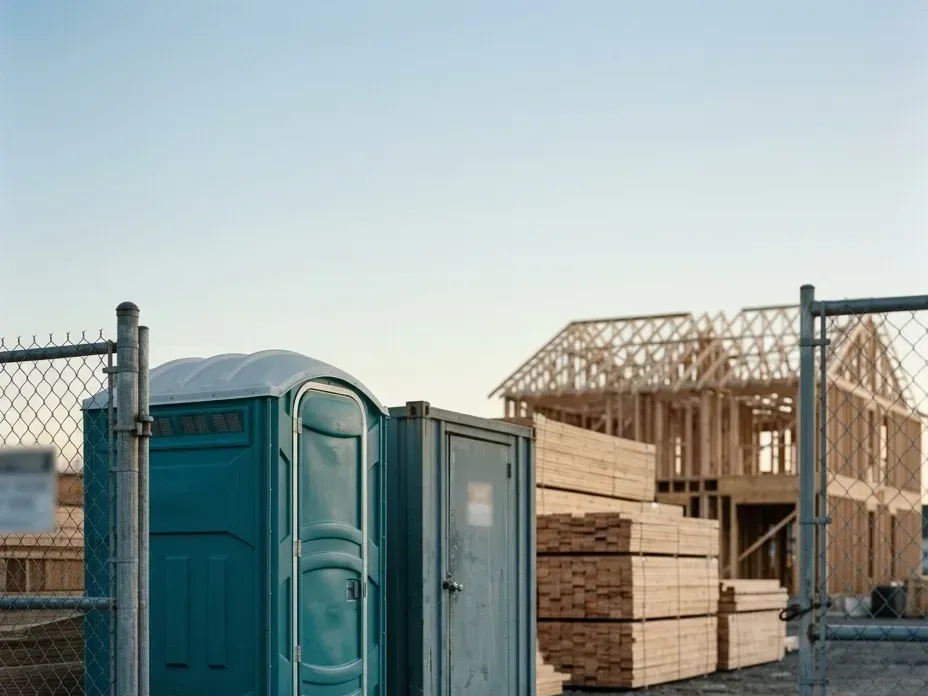
Go where units are needed on a schedule
The people who need portable restrooms on a schedule are a short, findable list:
- General contractors, builders, and site supervisors for construction. These are your recurring accounts — the backbone of the business.
- Event planners, venues, and event coordinators for one-off events.
- Municipalities and parks departments for public events, parks, and facilities.
Go to them directly. Visit active construction sites and ask the supervisor who handles their portable restrooms. Introduce yourself to the builders and GCs in your area before they need you, so you are the call they make when the next job breaks ground. Reach out to the event venues and planners who book the same weekends every year. The work is unglamorous and local, and so is the sales process — there is no shortcut that beats being known and available.
Construction first, events second
For a new operator, construction accounts are the better foundation because they recur. One site can bill monthly for many months and anchor your route, giving you predictable revenue to build on. Events fill gaps and pay a premium, but they come and go and start you from zero each time.
Chase a few standing construction accounts first to build a dependable base, then add events as your route has capacity. The construction versus events chapter goes deeper on how the two customers differ; the sequencing lesson for your first ten accounts is simple: land the recurring ones first.
Reliability is the whole marketing plan
In this business, reliability is everything. Contractors remember the units that overflowed and the services that got skipped, and they talk to each other on a jobsite and across jobs. The reverse is just as true: show up on cadence, keep the units clean, answer the phone, and you become the operator a GC brings to their next three jobsites.
That word of mouth compounds. A general contractor who trusts you does not shop around — they hand you the next job, and they mention you to the other GCs they know. Reliability, documented with a service record, is your real marketing. It is cheaper and more durable than any ad, and it is the one advantage a disciplined solo operator has over a distracted bigger competitor.
Be easy to hire and hard to fire
Two operational things win and keep accounts:
Quote fast. When a builder needs units, they need them now. The operator who returns the call and sends a clear quote same-day often wins over a cheaper competitor who takes three days. Have a simple way to take a request, check what you have available, and send a number quickly.
Never overpromise your route. The fastest way to lose a new account is to commit a unit you do not have free, or to promise a service cadence your route cannot hold. From day one, know which units are available before you say yes to a job — so you never double-book a unit or overpromise a route you cannot service. Reliability starts with knowing what you actually have free.
The front door and the follow-through
You do not need a website to start — a phone number, a way to quote, and a way to take a booking is enough to win your first accounts. What you do need is a way to see which units are available before you commit, and a way to prove the service happened once you do.
That is the loop a tool built for this trade should handle: a public request page and quote front door so a builder can reach you and get a number, a live view of which units are free so you never double-book, and a proof-of-service record you can forward when a site manager asks whether a unit was serviced. The free tier tracks up to 10 units and two active placements with no card — enough to run your first accounts and prove the loop before you pay for anything. Requests are free on every tier, so the front door never meters your incoming work. Win the first ten on reliability, document every service, and let the referrals compound into a route.
Frequently Asked Questions
- How do I get my first porta potty customers?
- Go straight to the people who need units on a schedule: local general contractors, builders, and site supervisors for construction, and event planners, venues, and municipalities for events. Show up, quote fast, and be reliable. Your first accounts come from local relationships and being the operator who answers the phone and services on time — not from ads.
- Are construction or event customers better for a new operator?
- Construction accounts are the better foundation because they recur — one site can bill monthly for many months and anchor your route. Events fill gaps and pay a premium but come and go. Chase a few standing construction accounts first to build a dependable base, then add events as your route has capacity.
- How important is reliability in this business?
- It is everything. Contractors remember the units that overflowed and the services that got skipped, and they talk to each other. Show up on cadence, keep the units clean, and answer the phone, and you become the operator a GC brings to their next three jobsites. Reliability, documented with a service record, is your real marketing.
- Do I need a website to start?
- Not immediately — a phone number, a way to quote, and a way to take a booking is enough to win your first accounts. What you do need from day one is a way to see which units are available before you commit to a job, so you never double-book a unit or overpromise your route. Reliability starts with knowing what you actually have free.
Run the route from your phone, and stamp every stop
SwapProof is built for solo and small-crew portable-restroom operators — track your fleet, drive the route offline in a dead-zone site, and stamp every service with a photo, GPS when you allow it, and a timestamp you can forward. The free tier tracks up to 10 units and two active placements — enough to prove the loop on your first accounts, no card.